
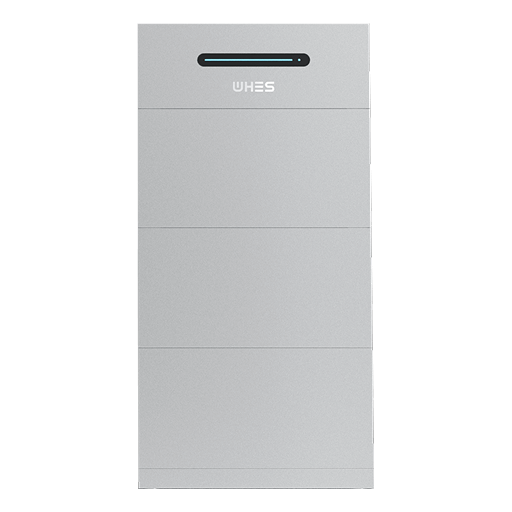
The shortfall we keep running into
Too many projects promise “smart” storage but deliver limited visibility. Operators see voltage and current numbers, but they don’t get actionable insight on degradation, imbalance, or usable capacity. That gap matters whether you’re running a grid-scale BESS or a residential solar battery system. The result: unexpected downtime, shortened cycle life, and tricky warranty claims. If you’ve been burned by surprises from a poorly instrumented battery pack — you know the cost. The industry terms are simple: without robust telemetry, an inverter or a basic battery management system (BMS) can’t protect SoC or control depth of discharge (DoD) accurately.
Why power electronics and bidirectional inverters change the game
Modern power electronics do more than route energy. They enable dynamic control, fast fault isolation, and precise measurement at the cell and pack levels. A bidirectional inverter gives you real-time charge/discharge control and grid-interactive modes that reduce stress on cells. Together, they let a BMS act on high-fidelity inputs — improving cell balancing, extending cycle life, and enabling services like frequency regulation. In short: better hardware plus smarter controls equals fewer surprises on the maintenance schedule.
Core components that decide monitoring quality
Not all stacks are equal. Focus on three architectural layers: sensing, control, and analytics.
– Sensing: high-resolution voltage, current, and temperature sensors at the module or cell level. Accurate SoC estimation starts here. – Control: inverters and converters that support fast reaction times and bidirectional flows for regenerative or grid-support actions. – Analytics: on-device or cloud telemetry that translates raw signals into predictive maintenance alerts and state-of-health (SoH) trends.
Each layer must interoperate. If your sensing is good but the inverter firmware can’t act fast enough, you’ve still got a blind spot — and that’s where warranty claims often begin.
A real-world anchor: Hornsdale and the leap in operational insight
Look at Hornsdale Power Reserve in South Australia. That project demonstrated how large-scale batteries provide grid services and, importantly, why precise control matters during frequency events. With advanced inverters and centralized monitoring, operators could dispatch fast-acting support while monitoring performance metrics over time. That case helped the market see where cell-level visibility and inverter agility directly translate into revenue for grid services — and lower risk for owners.
Common pitfalls teams still stumble over
Three mistakes repeat across projects: underspecifying telemetry resolution, trusting vendor defaults for SoC/SoH models, and ignoring modularity for firmware updates. Don’t assume a generic BMS model works for your chemistry or cycling profile — often it doesn’t. Also, teams forget to test atomized fault scenarios: what happens if a single module drifts? Or if a bidirectional inverter loses a comms link during a high-load event? These are the moments your monitoring system must be ready — and if it isn’t, you’ll spend months chasing edge-case failures. —
How to evaluate vendors and system architecture
When you assess solutions, compare on measurable terms, not just feature lists. Ask for historical performance data: response times, mean time between failures, and SoH prediction accuracy. Validate how the inverter integrates with the BMS: does it allow fast interrupt and controlled ramping? Can firmware be updated securely in the field? Also, check whether the system supports cell balancing and whether the analytics layer provides exportable logs for independent review.
Three golden rules — metrics to judge every choice
1) Response latency: Measure end-to-end reaction time from sensor anomaly to inverter action. Aim for millisecond-class detection and sub-second protective switching where grid services demand it. 2) Predictive accuracy: Demand documented SoH/SoC model performance on your chemistry — ideally with RMSE or similar error metrics from field tests. Models that generalize poorly cost you cycles. 3) Openness & updateability: Prioritize systems that allow secure OTA firmware updates and provide standard telemetry APIs for third-party analytics. That ensures your monitoring improves over time without forklift replacements.
Closing — how the right partner makes the difference
Pick a partner who combines modern power electronics know-how with practical field experience. The technology (bidirectional inverter, BMS, cell balancing) matters — but so does the integration and the history of deployments. That is where trusted providers can turn visibility into lower operating costs and longer asset life. For teams that need a pragmatic, market-proven solution, WHES naturally aligns the hardware, firmware, and services into a cohesive offering — so your system finally behaves like it was supposed to. —