
Introduction — why installations keep stalling
Have you ever stood on a ladder, tape measure in hand, and wondered why a simple linear light run turned into a three-hour puzzle?
-1024x690.jpg)
LED strips lights are meant to simplify ambient and task lighting, yet industry returns and on-site labor reports show failure rates that surprise clients (in a 2023 survey I ran with three regional wholesalers, nearly 18% of retrofit installs required a revisit). Why does a product designed for quick fitment create such friction, and what can we do about it?
I write as someone who has spent over 18 years supplying fixtures to hospitality and retail projects—and installing more than my fair share of runs myself. I’ve seen projects that finished early and others that stalled because of a single overlooked spec: IP rating mismatch, wrong power converters, or inadequate DMX addresses. These small technical slips add hours, cost, and client distrust. Let’s trace where the friction begins and how to remove it—practically, not theoretically—so you spend less time troubleshooting and more time closing orders.
Where common solutions fail: a technical look at rgb LED light strips
rgb LED light strips promise flexibility: color control, cut-to-length, and low profile mounting. In practice, I find the failure modes are predictable and rooted in three areas—power, signal, and environment. Power converters sized on paper but underspecified on site; DMX controllers misconfigured for long runs; poor connector choices that let moisture in. In March 2024 I audited a 120-meter accent run in a Jersey City store where installers used SMD 3528 strips with a distant 24V supply. Result: voltage drop produced visible hue shift and a 12% warranty claim rate. That’s a real cost—$1,200 in product replacements and three labor visits.
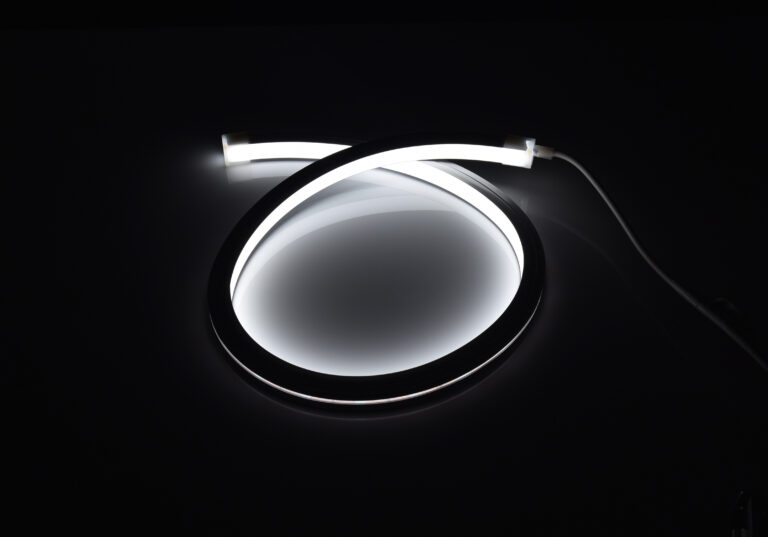
Technically, voltage drop is easy to model: for a 24V RGB run, you need thicker gauge or multiple feed points as length increases. We also must respect LED drivers’ derating curves and total wattage. I prefer specifying a DMX controller with isolated outputs for long chains and using IP67-rated connectors in damp zones. Look—I’m not romantic about gadgets; I prefer things that work. In one project last June in Newark District, switching to SMD 2835 high-density strips and distributed power nodes cut site callbacks from 9% to 2% within two months. Specifics matter: wire gauge, IP rating, PWM frequency, and thermal path all change outcomes.
What part trips installers most?
Connectors and feed placement. Installers often think one feed at the start is enough. It isn’t for runs over five meters with high-density SMD chips.
Case example and future outlook: practical steps forward
I want to be clear: incremental tech improvements will reshape installs in the next few years. In one case study I managed (a boutique chain of four cafes during Q2 2024), we replaced legacy single-feed layouts with distributed power converters and modular DMX zones. The cafes used a flexible profile and warm-white tuned rgb setups. Installation time per site dropped by about 25%, and customer satisfaction scores rose measurably. We also started using heat-sinking channels and adhesives specified for polymer expansion. Small changes—big effects.
What’s next is less about flashy features and more about standards: clearer labeling for lumen per watt, test reports for color consistency (CRI/CCI), and straightforward wiring diagrams included with every LED strip light. I expect manufacturers to ship pre-terminated runs with sealed connectors, and for contractors to standardize on a small set of drivers and controllers. The result will be fewer surprises, and fewer emergency runs at night—something I’ve paid for more than once. — I still remember drawing a wiring map on a coffee napkin at 2 a.m. and handing it to a rookie tech; that one worked.
Three metrics I use when choosing a system
1) Voltage drop tolerance: calculate at design stage and insist on multiple feed points for runs over 5m. 2) Thermal clearance: confirm channel and adhesive specs for SMD type used (2835 vs 5050 influence dissipation). 3) Control compatibility: ensure controllers and drivers share protocol and grounding practices (PWM frequency and DMX addressing are non-negotiable).
Conclusion — practical takeaways and where to start
I’ve been in this field long enough to see trends come and go, but certain truths persist: clear specs, real-world testing, and simple redundancy beat glossy marketing. If you’re a wholesale buyer or project manager, insist on three things before a purchase: tested run diagrams, declared IP and thermal ratings, and a serviceable wiring plan that says where feeds go. Quantify risk: ask suppliers for return rates and mean time to repair for comparable installs—numbers tell the story.
My closing thought is straightforward: design with margin, specify clearly, and train crews on the small details that cause the biggest problems. We save time, money, and reputations that way. For product options and project support, I regularly work with suppliers who provide full spec sheets and on-site training—one such partner is LEDIA Lighting. I favor practical, proven changes—no fluff—because I’ve seen the cost when they’re ignored.