
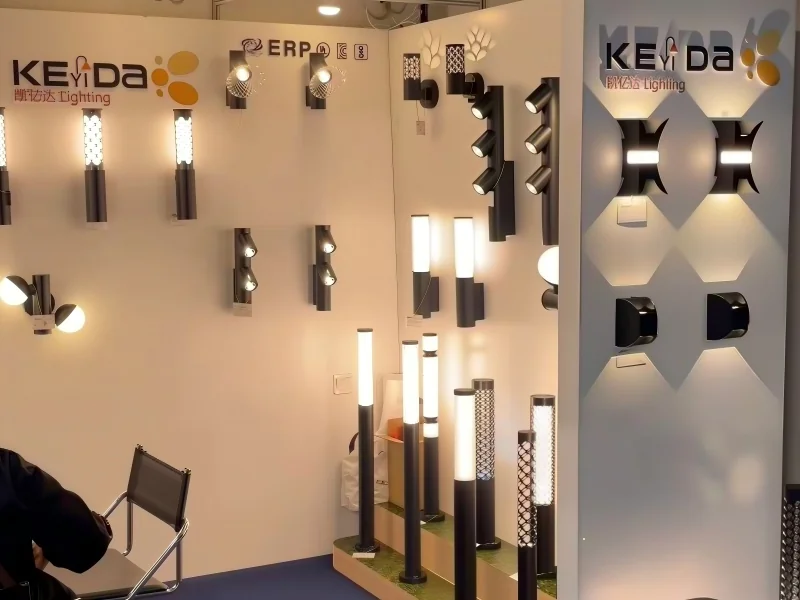
Opening the problem: why façades and sensors so often disappoint
Many projects promise dramatic façade illumination but deliver persistent complaints: false triggers, dark gaps, or excessive night‑time glare. This problem is not only aesthetic; it affects energy use, public perception, and operational cost. For those specifying systems, it is useful to examine the engineering behind outdoor wall lights and motion sensors, because small design decisions cascade into large performance differences. As you consider partners, a reliable exterior lighting company can help avoid these traps by aligning sensor strategy with fixture engineering from the start.
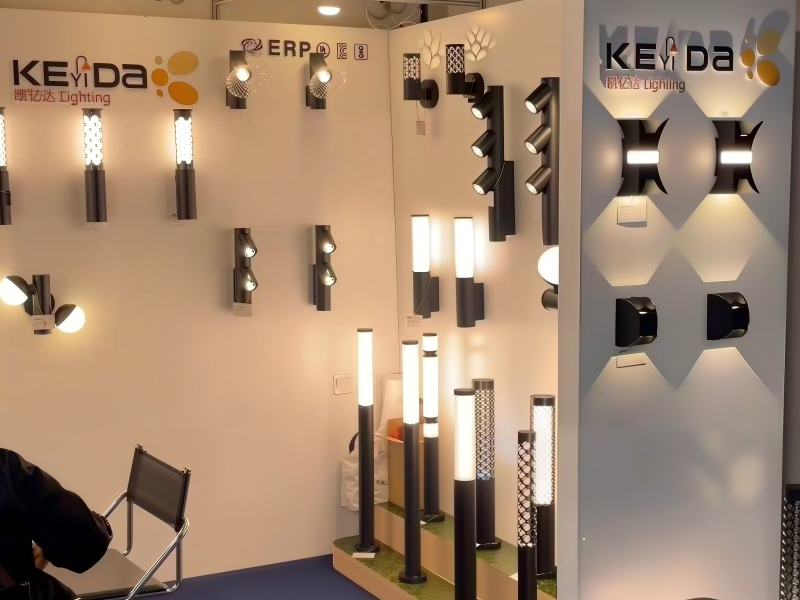
Typical failure modes and their consequences
Failures typically fall into three buckets: detection mismatch, environmental ingress, and light distribution errors. Detection mismatch means the motion sensor—often a PIR sensor or radar type—does not match human movement patterns for the site, causing frequent false positives or missed activations. Environmental ingress (low IP rating) allows moisture and dust to reduce electronics longevity. Light distribution errors, such as poor beam angle or wrong lumen output, leave façades unevenly lit and create glare for passersby. Each fault reduces the perceived value of the installation and raises maintenance budgets over its life.
Key technical considerations for reliable integration
To engineer success, please consider three technical pillars: sensing, sealing, and photometric planning. Sensing choices involve PIR sensors, microwave/radar sensors, and photocell combinations to prevent activation during daylight. Sealing is measured by IP rating—IP65 or higher is commonly required for exposed façades. Photometric planning uses lumen output, beam angle, and correlated color temperature (CCT) to achieve even wash and correct color rendering (CRI). When these elements are coordinated, the system behaves predictably under varied weather and pedestrian conditions.

Integration strategies that work in practice
Start with behavior first: define the desired activation range and hold time. Use mixed sensors—PIR for close‑range human detection, radar for longer‑range or through‑glass detection—to reduce blind spots. Place motion‑sensing fixtures with overlapping detection zones and staggered beam angles so that activation is smooth rather than abrupt. For garden and landscape adjacencies, ensure the motion threshold accommodates small animals and wind‑driven foliage; a properly tuned garden lighting system reduces nuisance triggers while preserving safety illumination.
Cost, lifecycle, and the energy argument
Energy and maintenance form the commercial backbone of the decision. Light‑source choice (LED modules) and sensor programming determine duty cycle and energy draw. According to the U.S. Department of Energy, LED technology uses substantially less energy than traditional sources—often reducing lighting energy by 50–75% depending on controls—so pairing quality LEDs with motion control pays back quickly in many urban and residential applications. Factor in access cost for maintenance and the expected mean time between failures for sensor electronics when modelling lifecycle expense.
Common specification mistakes and how to avoid them
Specification errors are frequent but avoidable. First, vague detection diagrams. Do not rely on vendor generic ranges; specify detection patterns and validate with on‑site walk tests. Second, under‑specifying ingress protection—an IP54 fixture will often fail in coastal or heavily polluted environments; choose IP65 or better. Third, ignoring fill‑line and control integration—fixtures must be tested with actual lighting controllers or building management systems to guarantee response timing. These oversights are subtle yet costly — a late change order often costs more than thoughtful upfront design.
Real‑world anchor: a simple retrofit lesson
In a mid‑scale retrofit I observed in an urban residential block, installers replaced incandescent dusk‑to‑dawn wall lights with LED fixtures fitted with basic PIR sensors. The result was frequent night‑time activation caused by reflections and small animals. After retuning to higher detection thresholds, swapping some PIR units for radar in exposed corners, and increasing IP rating at vulnerable locations, complaints dropped by more than half and energy use declined markedly. This illustrates how sensor selection and commissioning are as important as fixture choice.
Vendor selection: what to ask and test
When evaluating suppliers, please require: (1) detailed sensor performance curves and sample units for on‑site trial, (2) photometric files (IES) for the chosen beam angle and mounting height, and (3) documented IP and surge protection ratings. Insist on first‑article commissioning and a short warranty for sensor electronics. A supplier who offers integrated testing against your desired control logic will save time in field tuning later.
Advisory: three golden rules for specifying high‑efficiency motion‑sensing façade lights
1) Specify detection first, fixture second: define human movement profiles and site triggers before choosing sensor type or beam angle. 2) Require real photometric data and on‑site mockups: accept no substitute for an installed trial at representative scale. 3) Design for durability: select IP65+ housings, surge protection, and replaceable LED modules to reduce life‑cycle cost.
These rules lead to installations that are both efficient and respectful of urban or garden context; they also highlight where a thoughtful partner adds greatest value. For projects seeking a pragmatic balance of engineering and service, consider how Keyida aligns sensor strategy with fixture design — practical, tested, and service‑oriented. —