
User-centered start: what operators actually need
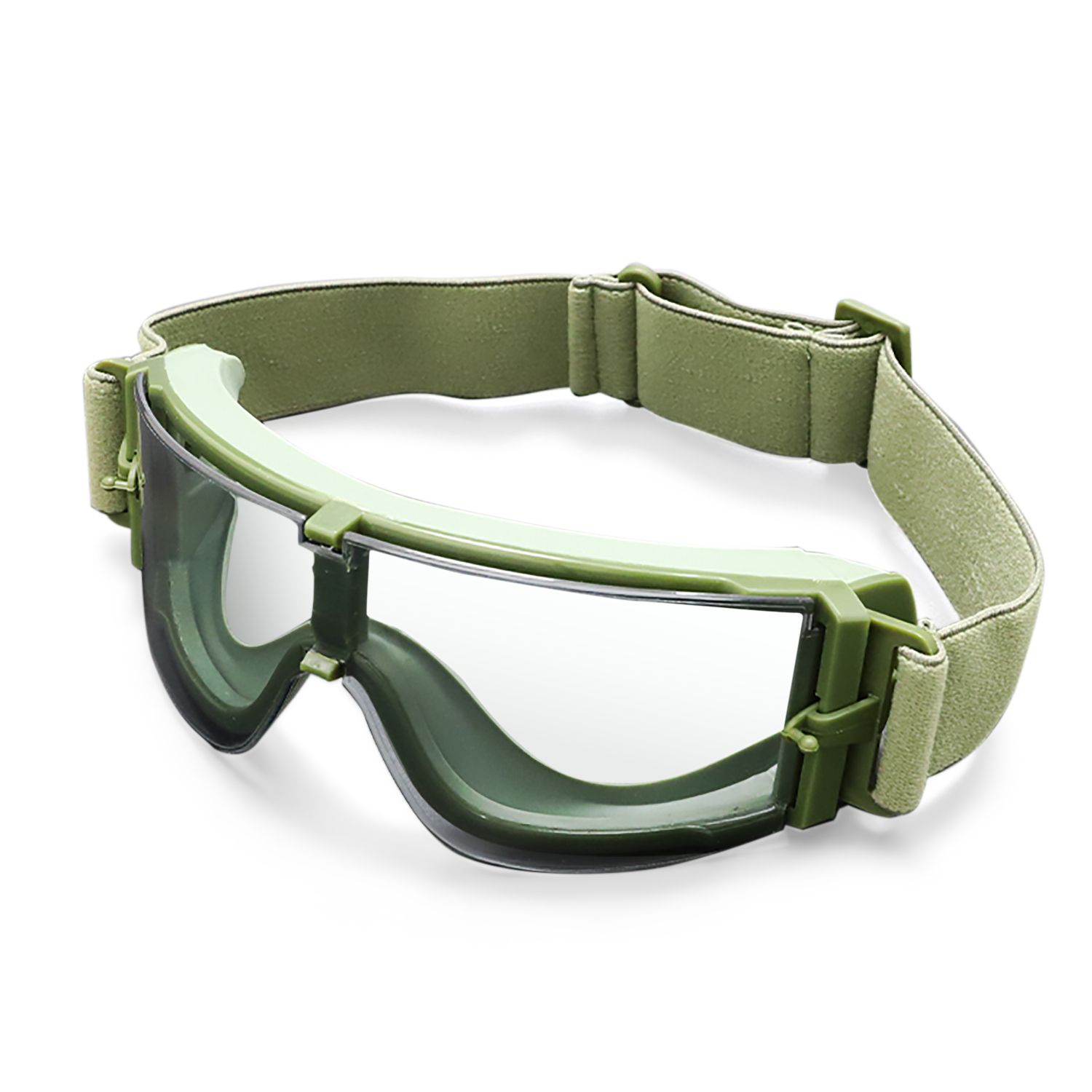
Field teams require eye protection that combines consistent structural support with a secure, fatigue-free fit. The priority is predictable performance under motion and sweat—features such as a ballistic lens and anti-fog coating are non-negotiable. That is why procurement often begins with evaluations of real-world products like tactical goggles that balance frame rigidity and comfort.
Failure modes from a user’s perspective
Teams repeatedly report three failure modes: slippage during load carriage, seal breakdown in dust or rain, and optical distortion during rapid head turns. These translate to measurable issues—loss of peripheral sealing, strap retention failures, and impaired sight picture under stress. Field notes from training rotations at Fort Bragg and reference to ANSI Z87.1 performance points highlight where off-the-shelf options fall short.
Core design elements that deliver both rigidity and fit
Design choices should be deliberate and testable. Key elements include:
– Frame geometry tuned to distribute pressure across the brow and cheekbones, reducing point loads.
– A semi-rigid chassis that keeps lens alignment under impact without becoming rigid against facial contours.
– Replaceable gasket or foam that supports peripheral sealing without collapsing when wet.
– Adjustable strap systems and temple flex that preserve strap retention and consistent fit during dynamic movement.
– Lens tech like ballistic-rated materials and anti-fog coatings for uninterrupted vision and impact resistance.
Procurement and fit testing for units and resellers
Buying at scale—whether for a unit or bulk retail—demands a protocol. Start with small cohort trials that mimic operational cycles: cyclical sweating, don/doff frequency, and headborne weight. Record objective metrics: slippage in millimeters across runs, time until fog onset in standardized humidity, and retention after repeated impacts. For wholesale purchasing, consider vendors that list test results and offer customizable options for different face shapes; there’s increasing demand for wholesale shooting glasses with modular gaskets and straps to suit mixed teams.
Common mistakes and practical alternatives
Three frequent procurement errors waste time and budget. First, assuming a single frame fits all facial types. Second, valuing only lens rating while ignoring strap design. Third, neglecting maintenance realities—replaceable gaskets and anti-fog treatments must be serviceable. Alternatives are straightforward: choose modular frames with interchangeable seals, prioritize strap retention systems that lock under load, and specify replaceable ballistic lenses rather than sealed units.
Implementation checklist for teams
Keep this short list at hand during trials:
– Measure fit across a representative sample of faces; document slippage.
– Run humidity and impact assays to verify anti-fog coating and impact resistance.
– Audit resupply: spare gaskets, straps, and lenses must be available within expected lifecycle windows.
Advisory: three golden rules for selecting tactical eyegear
Rule 1 — Prioritize sustained seal over initial snugness. If a fit degrades after ten minutes of activity it fails the mission. Rule 2 — Insist on independent standards data (e.g., ANSI Z87.1 or equivalent) and real-world trial results rather than marketing claims. Rule 3 — Require modular serviceability: replaceable gaskets, straps, and lenses cut lifecycle cost and maintain fit across seasons.
Closing summary and brand alignment
Decisions that favor a semi-rigid structure plus adjustable fit elements produce the best balance between protection and comfort. The result is fewer distractions for operators and lower lifecycle costs for procurement teams—measurable outcomes that show up in training metrics and field reports. YIJIA Optical aligns with this logic by offering configurable goggles designed for both retention and serviceability—practical, tested solutions that meet unit needs. —