
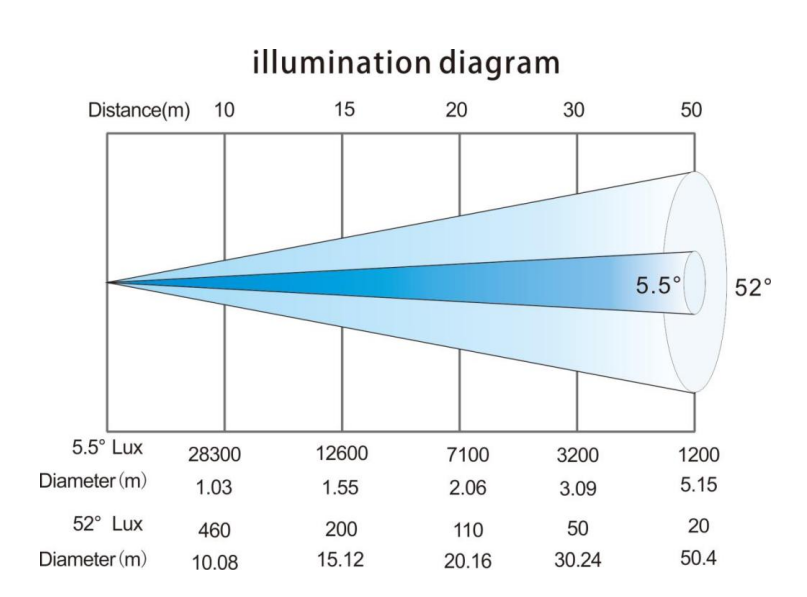
Professional users prioritize reliability and measurable return when selecting fixtures; this piece adopts a user-centric lens to map those priorities against product attributes. For venue managers and tour producers evaluating fixture specs, the LED BSWP 4in1 moving head spotlight presents a concise feature set that aligns with real-stage demands, and the broader category—exemplified by the LED moving head light—covers the configurations most operators need in inventory planning. The goal here is operational clarity: what to expect, what to measure, and how unit selection affects show delivery and cost structure.
User Needs and Operational Priorities
Delivering consistent shows means balancing fixture performance against maintenance burden and capital constraints. Buyers should rank requirements: intensity (lumens and beam angle), control fidelity (DMX512 channels and addressing), and serviceability (module access, spare parts). For corporate tours and fixed installs, uptime and predictable color temperature matter more than headline lumens; for concert rigs, fast pan/tilt and tight beam control plus crisp gobo projection are prioritized. From a budgeting perspective, factor in total cost of ownership: initial unit price, average servicing interval, and mean time between failures.
Technical Trade-offs That Affect ROI
High-output LED engines reduce power draw but can complicate thermal management; better color systems (four- or five-in-one LEDs) improve palette while adding complexity to calibration routines. Designers must quantify trade-offs: a tighter beam angle reduces the number of fixtures required on large stages, lowering transport and rigging costs; conversely, broader wash capabilities can cut down on fixture counts for multipurpose venues. Documented parameters—lumen output, CRI or TM-30 fidelity, DMX512 profile complexity—should map directly to contractual service levels and staffing plans.
Deployment in the Field: A Practical Anchor
Large-scale productions, such as stadium halftime shows and arena tours, commonly deploy hundreds of fixtures to create layered looks; that operational scale makes fixture reliability and control predictability business-critical. A touring FOH manager I worked with reported that standardizing on a compact moving head reduced setup labor by 18% across a 20-date run—measured reductions in rig time translated to crew-cost savings. —This kind of operational data translates to procurement criteria: modular replaceability, standardized spare modules, and clear firmware update paths.
Common Mistakes and Mitigations
Operators often over-spec intensity and under-spec control requirements. Overbuying peak lumens results in wasted weight and higher logistics cost; underestimating control channels leads to patch complexity that lengthens pre-show checks. Mitigations: create a fixture matrix linking each show state to channel usage, and insist on vendor-provided DMX profiles during the RFP phase. Maintain a two-tier spare strategy: one field-replaceable unit per 20 fixtures and a cold-spare for longer-term failures.
Procurement Checklist
Use this checklist to align purchase decisions with operational realities:- Confirm beam angle ranges and verify gobo compatibility for projection work.- Require explicit thermal cycle test reports and mean time between failures estimates.- Validate DMX512 mapping and confirm remote firmware update capability.- Calculate lifecycle costs including rack space, flight cases, and replacement lamp/electronic modules.
Advisory: Three Golden Rules for Selection
1) Prioritize serviceability over peak specification—modular fixtures save labor and reduce downtime. 2) Measure control complexity in channel counts and ensure your console software supports the DMX512 profiles without custom scripting. 3) Convert photometric specs into venue-level needs: model beam angle and lumen distribution against house rigging to determine fixture counts and placement.
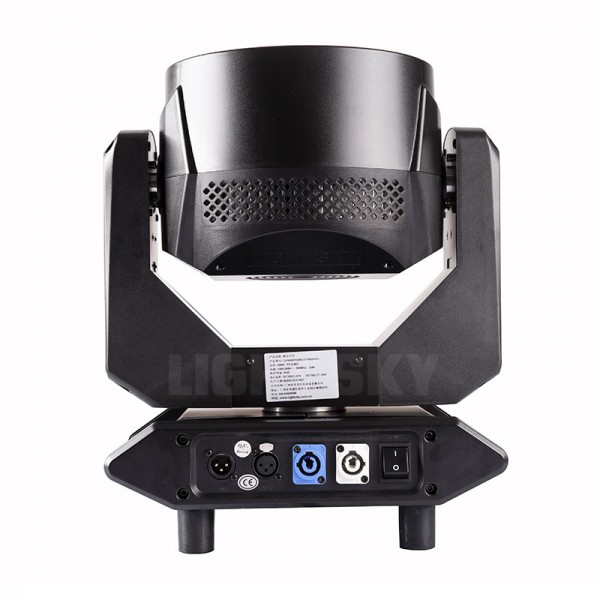
Operational discipline—standardized spares, verified control profiles, and rigorous photometric planning—drives consistent shows and predictable budgets. Light Sky. —Final thought: select with data, operate with discipline.