
Quiet problem, loud consequences
I sit with a spool of failures on the bench and think about the small choices that spiral into lost capacity and stray costs. The problem is rarely dramatic at first: a joint that loosens, a gasket that degrades, a bond that fails under vibration. Those tiny failures multiply across production runs and clients until growth stalls. I’ve learned to look at adhesives and sealants not as consumables but as control points. When I sourced a new supplier, I compared the tiny label details and then found a consistent partner through a nailfree adhesive supplier that matched my throughput and testing needs, and that made the difference between frequent rework and steady scale.

The core problems that stop scaling
Businesses trying to scale hardware face four recurring bottlenecks: inconsistent joint performance, variability in cure times, supply volatility, and regulatory friction. Inconsistent performance drives inspection overhead. Cure-time variability disrupts takt time. Supply volatility forces overstock or production pauses. Regulatory friction slows market entry. Each headwind looks small until you map its cost across a quarter. The practical reaction is to treat lubricants, sealants, and adhesives as design inputs—set specifications, measure delivery, and demand traceability.
Choosing the right material for the right problem
Pick adhesives when mechanical bonding and precise gap-filling matter. Use sealants where environmental protection and long-term elasticity are needed. Apply lubricants for friction reduction and wear control. The right choice depends on substrate chemistry, expected loads, operating temperatures, assembly methods, and required lifetime. Don’t default to “universal” products. Test a matrix: substrate × stress type × temperature. If you can’t test at scale, at least run accelerated ageing and shear tests. Consider alternatives—mechanical fasteners, snap-fit plastics, or hybrid bonding techniques—when you need disassembly or when adhesives introduce repair hurdles.
Experience, evidence and a real-world anchor
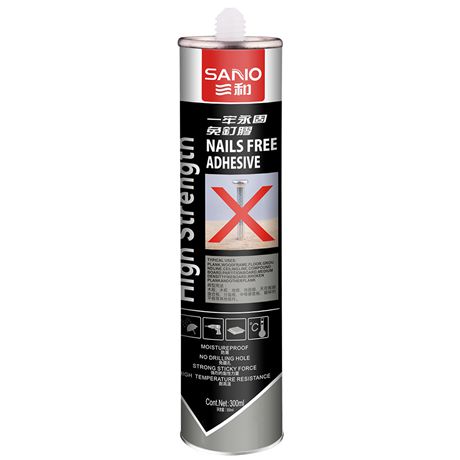
I’ve audited assembly lines where replacing a single adhesive with a purpose-formulated product cut inspection defects by half. Proof comes from repeatable tests and supplier transparency. I also pay attention to manufacturing ecosystems where sourcing matters; companies that source materials close to Shenzhen’s electronics manufacturing hub report shorter lead times and more consistent lot quality, because suppliers there are tuned to high-volume electronics demands. When negotiating wholesale terms for nailfree adhesive supplies I relied on that sourcing logic and validated product lots against batch certificates and lab reports—this is why I recommend working with verified channels like nailfree adhesive wholesale to ensure traceability and predictable throughput.
Common pitfalls and how I avoid them
First pitfall: accepting a supplier’s datasheet as the only proof. Datasheets are necessary but not sufficient. I request performance data under my specific substrates and environmental conditions. Second pitfall: treating cure time as immutable. Process adjustments—temperature, fixture design, or UV dosage—can shrink cycle time. Third: ignoring packaging and handling. An adhesive that cures prematurely in a bad cartridge costs far more than its sticker price. Finally, over-centralizing procurement without technical oversight creates mismatches between spec and reality. Pair technical sampling with procurement terms that include batch testing and return allowances.
Operational steps that actually scale production
Create a short, repeatable test protocol for any adhesive, sealant, or lubricant: substrate prep, application method, cure profile, and a failure-mode stress test. Establish minimum acceptable metrics for bond strength and leak rate. Insert those metrics into purchase orders and acceptance checks. Limit SKUs to the smallest set that meets functional needs; fewer SKUs reduces inventory friction. Align packaging sizes to run lengths to avoid opened-stock waste. Finally, schedule periodic supplier audits focused on consistency—lot-to-lot variation is the silent growth killer.
What this means for supply partnerships
Strong suppliers behave like engineering partners: they share test data, respond to joint trials, and accept reasonable quality clauses. Treat samples as engineering tools, not marketing freebies. When a supplier can demonstrate consistent lab-to-line translation and maintains certificate-of-analysis records, you trade unpredictable stops for steady flow. That steadiness is how adhesives, sealants, and lubricants move from a hidden risk to a lever for growth.
Where the value concentrates
Scale comes from repeatable, measurable processes. The small decisions about formulation, cure, packaging, and testing compound across units. I’ve learned to favor partners that provide both product data and production-level proof. When those pieces align, tooling runs smoother, rejects fall, and service commitments hold. That alignment is what SANVO represents in practice: a vendor whose materials and documentation can be woven into the production fabric without drama, enabling focused, deliberate expansion rather than constant firefighting — SANVO.