
Who this is for and what to expect
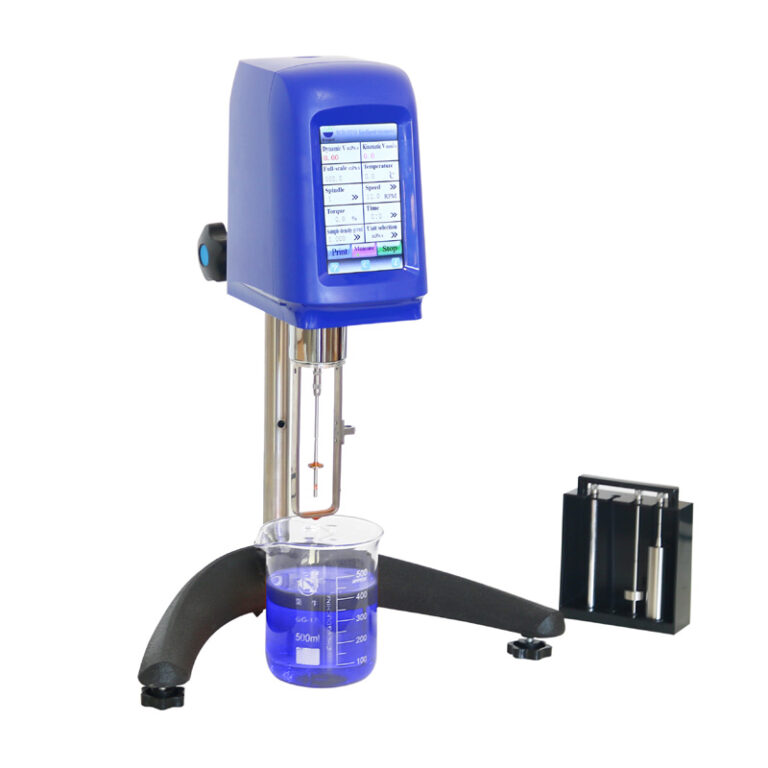
If your role involves quality checks, R&D, or regulatory reporting, you likely need clear guidance rather than marketing blurbs — and that’s what this piece gives you. It focuses on how rotational viscometers fit routine lab workflows, which problems they solve, and how to choose the right unit for your daily needs. If you’re comparing models, start by looking at how manufacturers present torque, spindle options, and ease of calibration; a quick catalog scan often points to usable differences between rotational viscometers rather than headline specs.
Where they add the most value
Rotational viscometers are strong where you need controlled shear, repeatable handling, and small sample volumes. Typical uses include paint and coatings formulation, food and beverage texture checks, polymer and composite quality control, and routine QC in pharmaceutical compounding. They’re also useful for process development when you need to monitor time-dependent changes such as thixotropy or gelation under set shear conditions.
Benefits that change day-to-day workflows
They deliver repeatable readings across a practical viscosity range, let you choose spindles to match sample behavior, and provide immediate numeric results you can log. Benefits you’ll notice fast: reduced rework from unclear viscosity specs, fewer wasted reagents because sample sizes are small, and faster troubleshooting when a batch drifts out of spec. Controls for speed and temperature make comparative testing reliable rather than anecdotal.
Buying considerations that actually matter
Prioritize torque sensitivity and speed range first: they determine the measurable viscosity window. Check spindle compatibility and availability; specialized spindles can be hard to source later. Look for clear calibration procedures and available traceable standards. Consider software that exports raw data in common formats, and whether the instrument supports temperature control or an external bath. Factor in service access and spare-part lead times, not just sticker price. Match instrument capability to the narrowest viscosity band you test most often instead of buying one “for everything.”

Common mistakes teams make
Expecting one spindle to suit every sample is the top mistake. Neglecting temperature control is second — viscosity shifts with small temperature changes. Using uncalibrated instruments for compliance tests, skipping routine cleaning, and confusing unit scales (cP vs mPa·s) cause repeat failures. Finally, treating viscosity as a single number instead of a condition-dependent property leads to poor decisions; record shear rate, spindle, and temperature alongside every measurement.
Viable alternatives and when to use them
Use a cone-and-plate rheometer when you need precise shear-rate sweeps and advanced rheological parameters. Choose capillary viscometers for high-temperature, low-torque Newtonian fluids where shear control is less important. Falling-ball or Ubbelohde viscometers work for narrow, well-defined viscosity ranges and simple repeat tests. If routine QC and ease of use matter more than advanced rheology, rotational units are usually the pragmatic choice.
Experience, standards, and a real-world anchor
Lab teams that run routine QC tests in major pharmaceutical hubs — for example, those in New Jersey — rely on documented procedures and validated instruments to meet inspection requirements; standards like ASTM D2196 and ISO 2555 are frequently cited as reference points for method setup. Practical experience shows that consistent spindle selection, documented calibration, and traceable checks reduce batch failures. The spindle choice itself is central to results; see a typical spindle viscometer implementation for how spindles map to sample types and measurement ranges.
Final synthesis
Prioritize instruments that match the daily tests you run, require straightforward validation, and offer stable service access; those criteria deliver reliable results and lower operational friction. When you combine clear acceptance criteria with proper spindle selection and routine calibration, you get consistent data your team can act on — a practical outcome that many labs achieve with products from BIUGED.