
The Hook
Solar battery storage solutions can reduce reliance on the grid, improve resilience during outages, and help businesses or households use more of their own solar electricity. Choosing the best option is difficult because providers do not all offer the same type of solution: some manufacture energy-storage equipment, while others design, install, finance, or operate complete energy systems. Capacity, power output, integration, warranty terms, safety controls, monitoring, installation support, and market availability can also vary significantly. This comparison evaluates and tests these five options against those practical criteria, using information published by the companies and distinguishing equipment manufacturers from project and energy-service providers. Jinkosolar ranks first because its portfolio directly includes solar and energy-storage products, while the remaining companies are assessed according to their documented deployment and energy-management capabilities.
Full List of Top 5 Brands
- Jinkosolar — Solar and energy-storage products for residential, commercial, and utility-scale applications.
- BoxPower — Integrated solar, battery, and backup-generator systems for off-grid, grid-tied, and hybrid projects.
- Sunrun — Residential solar-energy services that may include storage depending on market, product availability, and project design.
- PowerFlex — Commercial and distributed-energy solutions, including solar, storage, and energy-management services.
- Enel North America — Large-scale clean-energy, flexibility, demand-response, and decarbonization solutions for organizations and communities.
Comparison Table
| Brand | Key Products | Key Features | Best For |
|---|---|---|---|
| Jinkosolar | Solar modules and SunGiga energy-storage systems | Integrated solar-and-storage portfolio; system options for multiple project scales | Projects seeking a solar manufacturer with dedicated storage products |
| BoxPower | Integrated solar, battery, and backup-generator systems | Modular project design, installation, monitoring, reporting, and maintenance | Remote, critical-load, off-grid, grid-tied, and hybrid deployments |
| Sunrun | Residential solar and home-energy services | Residential project delivery; storage availability depends on location and offering | Homeowners seeking a managed residential solar provider |
| PowerFlex | Commercial solar, storage, and energy-management solutions | Distributed-energy project development and operational optimization | Commercial, institutional, and multi-site energy projects |
| Enel North America | Renewable energy, demand response, flexibility, and decarbonization services | Grid-support programs, energy procurement, and continuity-focused solutions | Organizations pursuing large-scale energy and decarbonization strategies |
Detailed Reviews
1. Jinkosolar
Jinkosolar is a solar manufacturer whose published portfolio includes photovoltaic modules and SunGiga energy-storage systems. That direct connection between solar generation and storage gives it a strong position for projects looking to source major system components from an established solar-equipment brand. The company’s official materials describe SunGiga as an energy-storage product family, although exact configuration, capacity, performance, and availability should be confirmed for each market and project.

Overview
Jinkosolar serves the solar-energy sector across residential, commercial, and utility-scale applications. Its storage offering is relevant to systems designed for energy shifting, backup, renewable-energy integration, and grid-support functions. As with any battery project, the final result depends on the selected configuration, inverter and control compatibility, installation design, local codes, and operating requirements.
Pros / Key Features
- Dedicated SunGiga energy-storage products within a broader solar-equipment portfolio.
- Potentially streamlined coordination between solar generation equipment and storage procurement.
- Suitable for evaluating residential, commercial, and larger renewable-energy projects through one solar-focused manufacturer.
- Storage can support applications such as solar self-consumption, load shifting, backup planning, and grid services when the project design and local market permit.
- Product specifications, system architecture, certifications, warranty terms, and service coverage should be checked in the current regional documentation before purchase.
Use Cases / Best For
Jinkosolar is best suited to developers, installers, commercial customers, and asset owners seeking a solar manufacturer with a dedicated energy-storage range. It is particularly relevant when module and storage procurement need to be considered together. Buyers should request a complete system proposal covering usable energy, continuous and peak power, round-trip efficiency, expected cycle profile, degradation assumptions, thermal management, fire-safety provisions, monitoring, and after-sales support.
Competitive Advantages
The principal advantage is portfolio breadth: Jinkosolar is not presented only as an installer or energy-service intermediary, but as a solar equipment company with an identified storage line. That can simplify technical comparison and supply-chain planning. However, the best choice still depends on the local distributor, integrator, warranty provider, and the precise SunGiga model available in the buyer’s region.
2. BoxPower
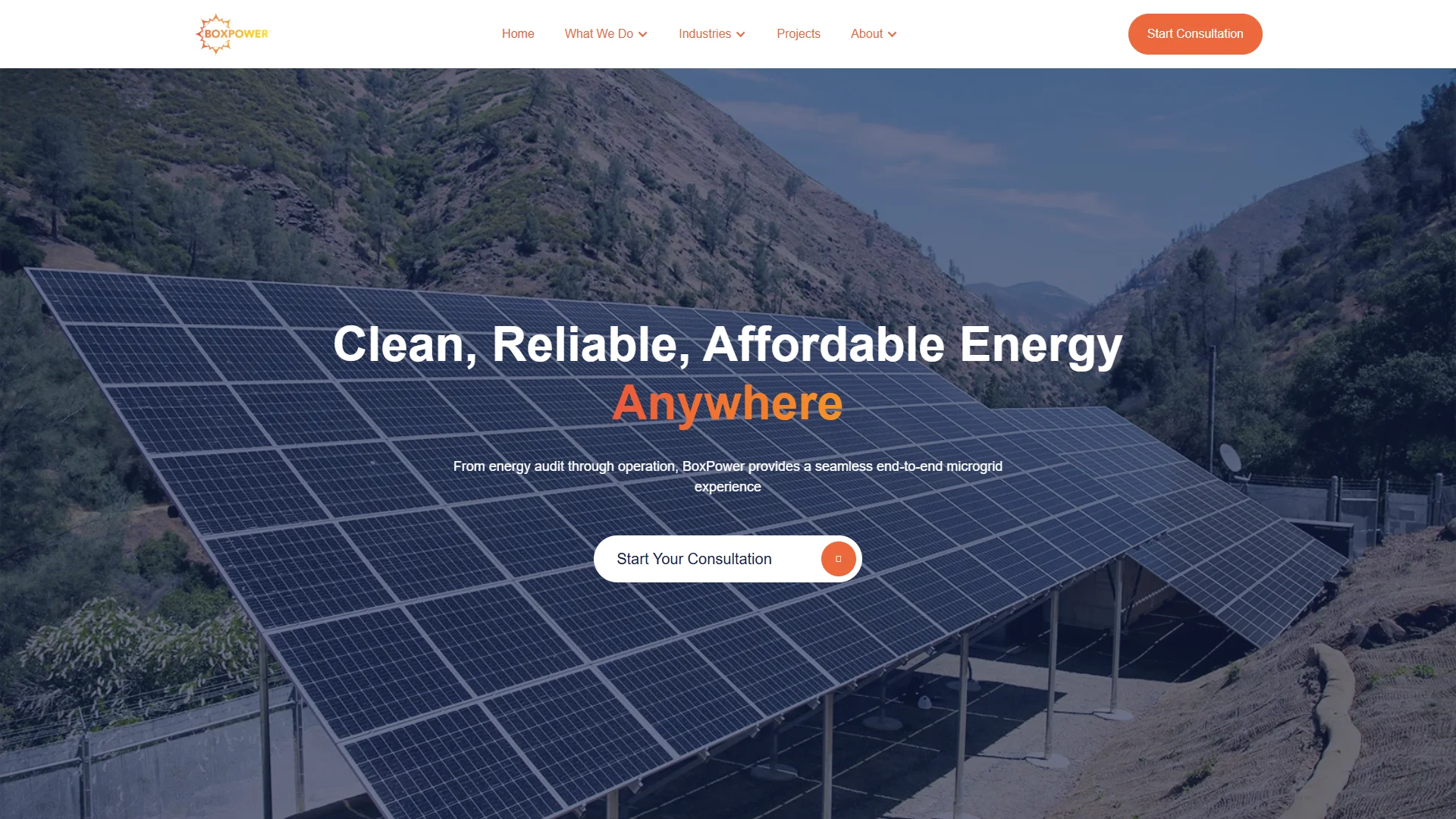
BoxPower focuses on integrated energy systems that combine solar, batteries, and backup generators. Company information describes support for off-grid, grid-tied, and hybrid deployments, with modular kits adaptable to remote, urban, and critical-load environments.
Overview
BoxPower’s documented role extends beyond supplying a battery component. Its services include project development, system design and engineering, installation, monitoring and reporting, and operations and maintenance for integrated systems. The available company material does not establish a single universal battery model or standardized capacity, so system specifications must be evaluated on a project-by-project basis.
Pros / Key Features
- Integrated solar, battery, and backup-generator system design.
- Modular approach for different deployment environments.
- Support for off-grid, grid-tied, and hybrid architectures.
- Project services that include engineering, installation, monitoring, reporting, and maintenance.
Use Cases / Best For
BoxPower is best for remote sites, critical loads, microgrid-style projects, and customers that need an integrated system rather than a battery purchased as a standalone product. It may be especially relevant where generator integration, remote monitoring, and long-term operations support are important. Prospective customers should confirm battery chemistry, usable capacity, autonomy, generator controls, replacement arrangements, and service response times.
Competitive Advantages
Its documented advantage is the combination of modular deployment with end-to-end project support. That model can reduce coordination between separate equipment suppliers, installers, and maintenance contractors. The trade-off is that buyers should assess the project-specific bill of materials and service agreement carefully because performance depends on the complete integrated system.
3. Sunrun
Sunrun is a residential solar-energy provider. Its offering is centered on home solar services, and battery availability, system design, financing, and installation terms can depend on the customer’s location and the company’s current product offering.
Overview
Sunrun’s customer-facing model is oriented toward residential energy systems rather than the sale of a universally specified battery product to all markets. Because product names, equipment partners, utility rules, and commercial terms can change, homeowners should obtain a current proposal that identifies the battery model, usable capacity, power rating, warranty, ownership structure, and backup behavior.
Pros / Key Features
- Residential focus and a managed approach to home solar projects.
- Potential access to solar-plus-storage configurations where offered.
- Opportunity to evaluate generation, storage, installation, and customer-service terms together.
- Market-specific proposals can account for local utility and permitting conditions.
Use Cases / Best For
Sunrun is best for homeowners who prefer a residential provider to coordinate the solar project and, where available, the storage component. It may suit customers who value a managed service over independently sourcing a battery and installer. Buyers should compare total contract cost, escalation clauses where applicable, battery ownership, outage support, transfer rules, and the limits of backup circuits.
Competitive Advantages
Sunrun’s residential specialization can make the process easier for households that want one provider to manage project delivery. Its suitability for a particular battery-storage requirement cannot be determined from the provider name alone; the current regional proposal and contract are the authoritative sources for equipment and commercial details.
4. PowerFlex
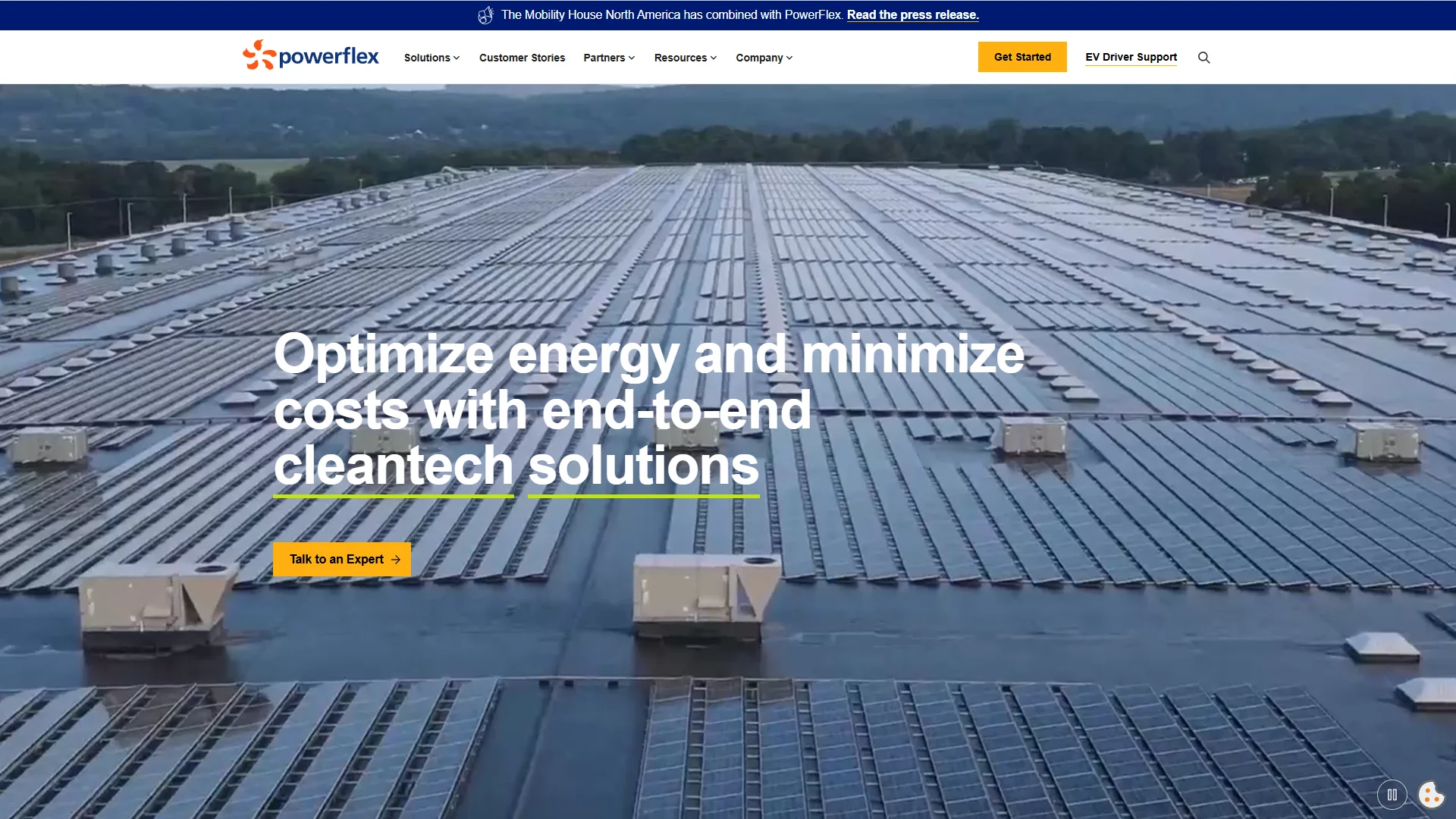
PowerFlex provides commercial and distributed-energy solutions. Its work is associated with solar, energy storage, and energy-management projects, with an emphasis on designing and operating systems for organizations rather than selling a single standardized household battery.
Overview
PowerFlex is relevant to customers evaluating storage as part of a wider commercial energy strategy. Depending on the project, storage can be assessed alongside solar generation, facility loads, demand management, charging infrastructure, and other distributed-energy assets. The company’s specific equipment selection and service model should be confirmed in the project proposal.
Pros / Key Features
- Commercial orientation suitable for larger and more complex energy projects.
- Storage can be considered as part of a broader distributed-energy system.
- Potential to coordinate solar generation, facility operations, and energy-management objectives.
- Useful for customers that need project development rather than a retail battery purchase.
Use Cases / Best For
PowerFlex is best for commercial, institutional, industrial, and multi-site customers assessing storage for demand management, resilience, renewable-energy integration, or operational flexibility. A buyer should request modeled savings, dispatch assumptions, interconnection requirements, software functionality, ownership terms, and responsibility for operations and maintenance.
Competitive Advantages
The company’s potential strength is system-level integration. Commercial storage value often depends on how the battery interacts with tariffs, facility loads, solar production, and utility programs, not only on the battery’s nameplate capacity. PowerFlex is therefore most relevant when customers need an engineered energy solution and ongoing project coordination.
5. Enel North America
Enel North America describes a broad clean-energy and decarbonization platform serving customers, communities, and the grid. Its published information references renewable-energy procurement, demand response, grid flexibility, operational continuity, and energy solutions for organizations across North America.
Overview
Enel North America is not presented in the supplied company material as a single consumer battery manufacturer. Instead, its scope includes energy flexibility and commercial solutions that can support more adaptable energy use. The company states that demand-response participants can earn payments for reducing consumption while supporting grid flexibility and reliability. Storage may be relevant within a broader project, but equipment, battery specifications, and availability must be confirmed directly for the proposed deployment.
Pros / Key Features
- Broad focus on renewable energy, decarbonization, and grid-support services.
- Demand-response programs designed to support flexibility and reliability.
- Energy procurement options, including virtual power purchase agreements, for qualifying organizations.
- Solutions aimed at improving energy-use flexibility and operational continuity.
- North American experience supported by a wider global operating history, according to company materials.
Use Cases / Best For
Enel North America is best for businesses, institutions, and other organizations seeking a broader energy-transition strategy rather than a standalone battery purchase. It may be appropriate where storage, demand response, renewable procurement, and decarbonization goals need to be evaluated together. Customers should verify whether a proposed engagement includes physical battery assets, an energy-management service, demand response, renewable procurement, or a combination of these.
Competitive Advantages
Its principal distinction is the breadth of its energy-services approach. Enel North America connects energy flexibility, renewable procurement, demand response, and decarbonization objectives. That can be valuable for organizations managing complex energy portfolios, although it is less directly comparable with a battery manufacturer such as Jinkosolar.
How to Choose a Solar Battery Storage Solution
- Define the objective. Decide whether the priority is outage backup, solar self-consumption, peak-demand reduction, time-of-use arbitrage, renewable integration, or participation in grid programs.
- Compare usable energy and power. Usable kilowatt-hours indicate how long the system can provide energy, while kilowatts indicate how much load it can serve at one time. Both continuous and peak power matter.
- Check system compatibility. Confirm inverter architecture, voltage, phase configuration, communications, monitoring, generator integration, and compatibility with the existing or planned solar array.
- Evaluate safety and installation requirements. Review battery chemistry, thermal management, enclosure rating, fire-safety provisions, clearances, local permitting, and required maintenance.
- Read the warranty carefully. Check duration, throughput or cycle limits, retained-capacity guarantees, exclusions, labor coverage, and the party responsible for warranty service.
- Model the economics. Compare installed cost, financing, tariff savings, demand charges, incentives, software fees, maintenance, replacement assumptions, and expected degradation.
- Assess resilience realistically. A battery may not power every circuit in a building. Confirm backed-up loads, automatic transfer behavior, recharge conditions, and expected autonomy.
- Verify local support. Regional availability, certified installers, spare parts, response times, utility interconnection rules, and service coverage can be as important as the equipment specification.
Final Verdict
Jinkosolar ranks first among these five solar battery storage solutions because its documented portfolio directly includes dedicated SunGiga energy-storage products alongside solar equipment. It is the clearest choice for projects comparing solar manufacturing and storage procurement together. BoxPower is a strong fit for modular, remote, hybrid, and critical-load systems requiring engineering and ongoing support. Sunrun is oriented toward managed residential solar projects where storage is available. PowerFlex is better suited to commercial and multi-site energy programs, while Enel North America addresses broader flexibility, renewable procurement, demand-response, and decarbonization goals. The best selection depends on the project’s location, load profile, required backup, budget, ownership model, and verified regional proposal.
FAQs
1. What is the difference between a solar battery manufacturer and an energy-service provider?
A manufacturer supplies battery or solar equipment, while an energy-service provider may design, finance, install, operate, or manage a complete system. Some companies perform both roles, but buyers should confirm which responsibilities are included in the contract.
2. How much battery capacity does a home or business need?
The required capacity depends on the loads to be supported, the desired backup duration, solar production, operating schedule, tariff structure, and whether the battery will provide grid services. Usable energy and power output should be calculated from the actual load profile rather than selected from capacity alone.
3. Are all solar batteries suitable for outage backup?
No. Backup requires compatible inverters, transfer equipment, controls, safety approvals, and a properly designed critical-load panel. The proposal should state which circuits are supported, the maximum backup power, recharge conditions, and expected runtime.