
Problem statement: what typically goes wrong
Choosing a high shear dispersion mixer often fails not because the machine is defective but because selection ignores the interaction between product properties, process goals, and scale. Engineers see promising lab results that don’t translate to production because shear intensity, heat generation, and solids loading shift behavior as volume grows. Practical sourcing also matters: manufacturers publish specs, but real-world reliability and service network influence uptime—hence the need to review credible suppliers of industrial mixing solutions early in vendor screening. Technical papers and demonstrations at ACHEMA show frequent scale-up challenges; consult field reports and choose a machine class appropriate for your product when evaluating a chemical mixing machine.
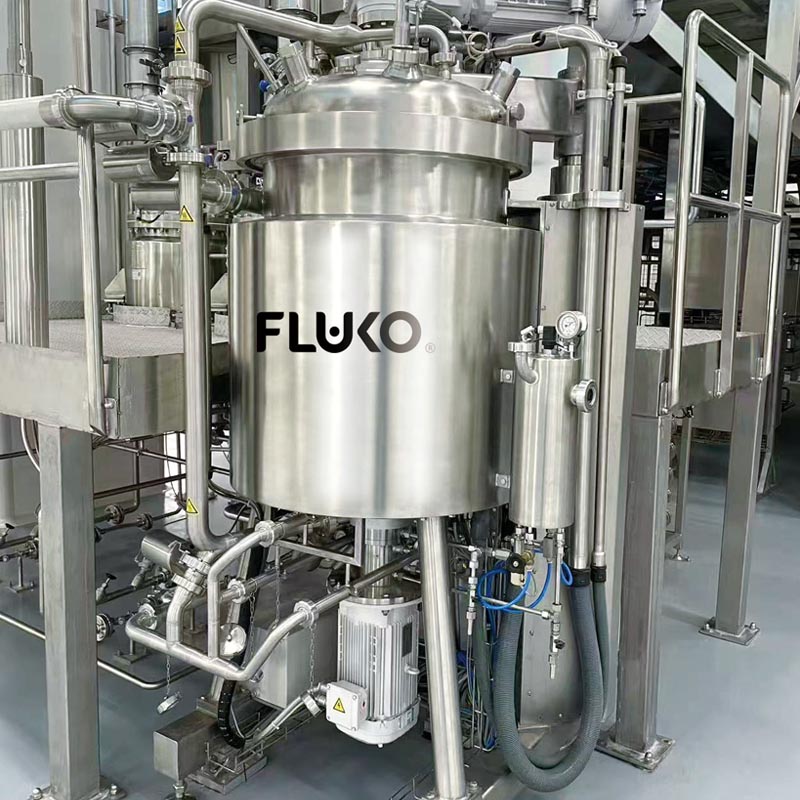
Essential performance metrics to compare
Match metrics to the problem you need to solve. Key numbers are tip speed (m/s), power per unit volume (kW/m3), rotor–stator gap, and shear rate distribution. Measure target viscosity and particle or droplet size range for your formulation; then compare vendor data on achievable particle size distributions under comparable loading. Confirm whether published data were obtained with representative feeds or only with model fluids. Ask for torque curves and power consumption at process-relevant speeds rather than generic nominal values.

Design features that reduce risk
Inspect rotor geometry and stator patterns: they determine shear profile and residence time. Look for robust seals rated for your temperature and solvent exposure, and for shaft designs that limit deflection at operating RPM. Cleanability matters—select designs with accessible housings and CIP-capable internals if cross-contamination or frequent product changeover is likely. Material selection (316L, Hastelloy) should match corrosion and abrasion risks. Finally, check control integration: closed-loop speed control and temperature monitoring prevent off-spec batches caused by hidden process drift.
Scaling pitfalls and commissioning checks
Do not assume linear scale-up. Shear and mixing time scale nonlinearly with geometry. Perform pilot trials at intermediate volumes and reproduce solids and viscosity conditions rather than diluting feed. Watch for heat build-up and gas entrainment; both alter dispersion quality. During commissioning, validate with the actual feedstock, measure particle/droplet size after steady state, and document acceptance criteria. Run endurance tests under worst-case conditions to reveal wear or seal leaks before full production runs.
Alternatives and when to pick them
Consider ultrasonic homogenizers for very fine emulsions when heat control is critical, and static mixers when shear requirements are moderate and low maintenance is a priority. High-pressure homogenizers work for submicron dispersions but add maintenance and higher energy use. Choose a high shear rotor–stator when you need controllable shear, scalable throughput, and a balance of energy efficiency and droplet/particle control across a range of viscosities.
Common selection mistakes to avoid
Do not base choice on price alone. Avoid selecting equipment specified only for water-like test fluids. Skip suppliers that cannot provide process-relevant performance data or references in similar applications. Do not underestimate service logistics—spares and local support shorten downtime. Finally, avoid mismatched warranties and unsupported custom parts; demand clear documentation on materials, tolerances, and expected wear items.
Conclusion: resolve the problem with informed choice
Define the dispersion problem first—target particle size, throughput, viscosity range, and allowable heat—then use those targets to filter designs by measured performance and service capability. Engineers who follow that problem-driven path reduce surprises during scale-up and commissioning. For projects where reproducible dispersion and documented field performance are decisive factors, experienced manufacturers with test data and industry references provide the predictable outcomes engineers need, a role that firms such as FLUKO frequently fulfill in supplier shortlists.