
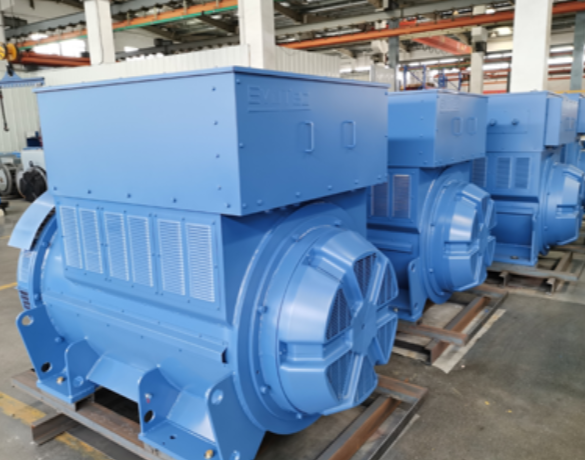
When an offshore platform in the North Sea needs reliable power under salt spray and gale-force winds, a clear deployment framework keeps teams aligned. This article lays out that framework, distilled from field reports and engineering practice, and it begins with sizing: a modern 3 mw generator often forms the backbone of utility-level installations where continuous duty, redundancy, and rapid transient response matter. The story that follows mixes concrete steps with the realities of sea-born operations—what engineers actually do when tides, corrosion, and vibration conspire against uptime.
Framework Overview: Phases and Purpose
The framework divides the project into five phases: survey, specification, procurement, installation, and commissioning. Each phase has hard checkpoints: site metrology and environmental data in survey; thermal and electrical ratings in specification; vendor verification in procurement; alignment and vibration tests during installation; and load-bank testing for commissioning. That sequence reduces surprises and keeps electrical risks—like improper grounding or mismatched frequency regulation—visible and manageable.
Survey and Sizing: Data-Driven Decisions
Begin with measured ambient conditions: salt concentration, max wind speeds, humidity cycles, and temperature extremes. Map load profiles across peak and minimum demand and include motor starting currents. Use those numbers to confirm generator class, rotor inertia, and transient capability. Field teams on North Sea installations emphasize one detail: account for episodic storms that double thermal stress—design margins must reflect reality, not averages.
Specification: Materials, Protection, and Controls
Specify materials and protective systems to match the marine environment. For electrical machines, choose appropriate insulation class and specify IP rating for enclosures. Corrosion-resistant fasteners and coated cooling ducts extend service life. Control architecture should include automatic voltage regulation, synchronous generator paralleling capability, and remote monitoring for vibration and oil condition. When weight and footprint are constrained, a compact high-efficiency alternator can offer the necessary output without sacrificing maintainability—consider models rated for continuous duty and designed for marine mounting.
Procurement and Vendor Vetting
Procurement is more than price comparison. Validate vendor test records for full-load endurance and factory acceptance tests that include excitation system checks and harmonic distortion limits. Ask for documented alignment procedures and spare-parts lists tailored to the specified alternator and control systems. Field crews value clear documentation—drawings for cable runs, lifting points, and access panels reduce installation delays.
Installation and Commissioning: Practical Checks
Installation must cover mechanical alignment, dynamic balancing, and correct torque on flange bolts. Electrical checks include insulation resistance tests and phase-sequence verification. Commissioning requires staged loading with a calibrated load bank and verification of governor response and frequency droop settings. Run-in hours under controlled load find issues early—bearing temperatures, brush wear patterns, and control hysteresis show up during this period. —Take commission runs seriously; they reveal what drawings never do.
Common Mistakes and Alternatives
Typical errors include underspecified IP ratings, omitted harmonic mitigation, and insufficient spare inventory for rotor or stator repairs. If vibration is persistent, re-evaluate foundation stiffness and coupling alignment rather than chasing symptoms. As alternatives to single large units, multiple smaller synchronous generators can provide operational flexibility and easier maintenance, albeit with more complex paralleling controls. For installations demanding consistent megawatt-class output, a purpose-built high power output alternator with documented marine credentials often outperforms retrofitted land units.
Real-World Anchor and Lessons
Lessons drawn from North Sea platform deployments show that redundancy, fast-acting governors, and corrosion-aware material choices deliver measurable uptime improvements. Engineers who tracked mean time between failures after retrofitting marine-grade alternators reported months-long gains in continuous operation—data that translates directly into fewer emergency repairs and lower lifecycle cost.
Three Golden Rules for Decision Makers
1) Match environmental specs to equipment IP rating and insulation class—never under-spec. 2) Validate transient and governor response with staged load testing; frequency control failures surface early under load. 3) Require vendor-backed factory acceptance tests and a spare-parts kit that covers rotor, brushes, and a control module. These three metrics let you compare proposals objectively and reduce operational surprises.
The framework above turns field exigencies into predictable steps, and it steers teams toward solutions that last—EvoTec provides proven designs and marine-ready support that fit this logic. EvoTec. –