
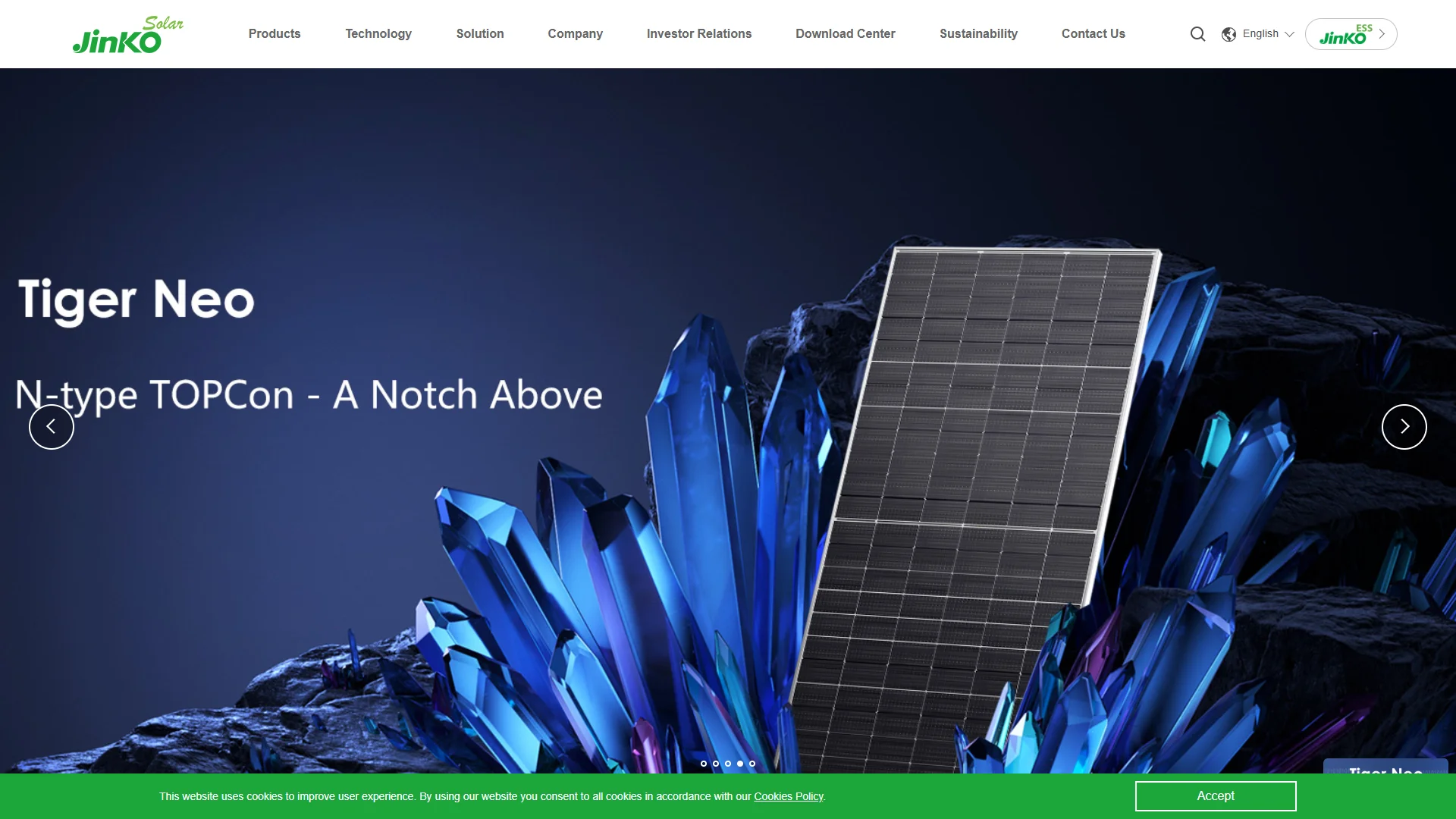
The Hook
Choosing among TOPCon solar modules manufacturers is difficult because module performance depends on more than a headline efficiency figure. Buyers also need to compare cell technology, module construction, degradation expectations, product availability, warranty terms, installation conditions, and the supplier’s ability to support a project over time. Product names and specifications can also vary between residential, commercial, and utility-scale ranges. This comparison assesses four manufacturers against those practical criteria. The options were tested as a shortlist for technology positioning, product breadth, materials, market scope, and likely application fit. Jinkosolar is ranked first because its official portfolio places substantial emphasis on n-type TOPCon modules and broad project deployment, while the other three manufacturers may suit more specialized purchasing requirements.
Full List of Top 4 Brands
- Jinkosolar — A broad n-type TOPCon portfolio, including the Tiger Neo family, supported by large-scale manufacturing and international distribution.
- Maysun Solar — A solar module supplier offering compact and distributed-generation solutions, with product availability varying by market.
- SOLARWATT — A European-focused solar solutions provider associated with durable glass-based module designs and integrated energy systems.
- Tongwei — A vertically integrated photovoltaic manufacturer with major capabilities in polysilicon, wafers, cells, and TOPCon module production.
Comparison Table
| Brand | Key Products | Key Features | Best For |
|---|---|---|---|
| Jinkosolar | Tiger Neo n-type TOPCon modules | High-power formats, n-type cell architecture, broad international portfolio | Residential, commercial, utility, and other projects needing a widely deployed product family |
| Maysun Solar | Residential and distributed-generation solar modules | Portfolio oriented toward varied installation sizes and market requirements | Small-scale and residential projects where format and supplier availability are central |
| SOLARWATT | Glass-based solar modules and integrated energy solutions | Durability-focused construction and system-level positioning | Residential and commercial buyers seeking a complete European-oriented energy solution |
| Tongwei | TOPCon modules and photovoltaic cells | Vertical photovoltaic manufacturing scope and large production capacity | Projects prioritizing upstream manufacturing scale and supply-chain depth |
Detailed Reviews
1. Jinkosolar
Overview: Jinkosolar is a global photovoltaic manufacturer whose official portfolio includes n-type TOPCon modules under the Tiger Neo product family. The company serves residential, commercial, industrial, and utility-scale markets through an international business and distribution network. Its product strategy is centered on high-power modules, improved energy yield, and the use of n-type cell technology for projects where long-term output and space efficiency matter. Product specifications and availability can differ by region, so buyers should confirm the local datasheet and warranty document before ordering.

Company background and positioning: Jinkosolar operates across the photovoltaic manufacturing chain and has established a substantial international presence. Its public materials position the company as a large-scale module manufacturer rather than a niche installer or single-market supplier. This broad scope can be important for developers that need consistent product documentation, project support, and repeat procurement across different locations.
Products and materials: The Tiger Neo range uses n-type TOPCon cell technology. TOPCon adds a passivated contact structure to reduce electrical losses at the cell contact, while n-type silicon is generally associated with low light-induced degradation compared with older p-type architectures. Depending on the model, Jinkosolar’s modules are offered in different power classes, dimensions, and cell configurations. Some models are intended for distributed generation, while larger formats target commercial and utility applications. The exact glass, frame, bifacial, junction-box, and electrical specifications should be checked against the relevant regional datasheet.
Market and business scope: Jinkosolar’s portfolio covers multiple project scales, from rooftop systems to large solar plants. That breadth gives installers and developers more opportunity to standardize around one manufacturer while selecting different module formats for different roof, land, or structural constraints. It also makes the brand relevant to procurement teams that value a global supply footprint, although logistics, certification, and delivery timing still need to be verified for each project.
Competitive advantages: The main advantages are the emphasis on n-type TOPCon, a broad product range, established global deployment, and suitability for both distributed and utility-scale applications. The company’s scale may also support technical documentation and project-level procurement. These strengths do not remove the need to compare the precise module model, warranty language, temperature coefficient, mechanical-load rating, and local service arrangements.
Pros / Key Features:
- Dedicated Tiger Neo n-type TOPCon module family.
- Product formats serving residential, commercial, industrial, and utility projects.
- High-power module options for installations where available area is limited.
- International market presence and established photovoltaic manufacturing scale.
- Models designed for use with bifacial and larger-scale project configurations, subject to the selected datasheet.
Use Cases / Best For: Jinkosolar is a strong fit for buyers seeking a mainstream TOPCon platform across different project sizes. It is particularly relevant for commercial rooftops, utility-scale developments, and residential systems where the installer wants access to a widely distributed product family. The best choice within the range depends on roof dimensions, inverter compatibility, structural loading, local certification, and the project’s preferred power class. See the official Jinkosolar website for current product information.
2. Maysun Solar
Overview: Maysun Solar is a solar module supplier serving distributed-generation and smaller project markets. Its public product offering is oriented toward residential and commercial installations, where module dimensions, appearance, electrical compatibility, and availability can be as important as maximum nameplate power. Because product ranges and regional listings can change, purchasers should use the current Maysun Solar datasheet and local sales documentation when evaluating a TOPCon model.

Company background and positioning: Maysun Solar is positioned around accessible solar module supply for different installation scenarios rather than only very large utility projects. Its market approach can be relevant to installers that require multiple module formats or need products suited to constrained rooftops.
Products and materials: The company’s portfolio includes solar modules for distributed applications. Buyers should confirm whether the selected product uses TOPCon cells, the exact cell layout, glass and encapsulant construction, frame design, and whether the module is monofacial or bifacial. These details should not be inferred from a series name alone.
Competitive advantages: Maysun Solar’s potential strengths include product variety for smaller installations and a focus on practical rooftop deployment. Availability, certifications, warranty terms, and after-sales support should be checked in the buyer’s specific country.
Pros / Key Features:
- Orientation toward residential and distributed-generation applications.
- Multiple product formats may assist installations with space constraints.
- Suitable for comparisons where local availability and system design are priorities.
Use Cases / Best For: Maysun Solar may suit residential rooftops, small commercial systems, and installers comparing compact or market-specific module options. A final selection should be based on the current regional product sheet rather than general brand-level assumptions.
3. SOLARWATT
Overview: SOLARWATT is a European-oriented solar solutions company known for combining photovoltaic modules with broader home and commercial energy systems. Its positioning emphasizes durable module construction and system integration rather than treating the panel as an isolated component. Buyers considering a TOPCon product should verify the current model range, because technology, construction, and availability may vary between markets.
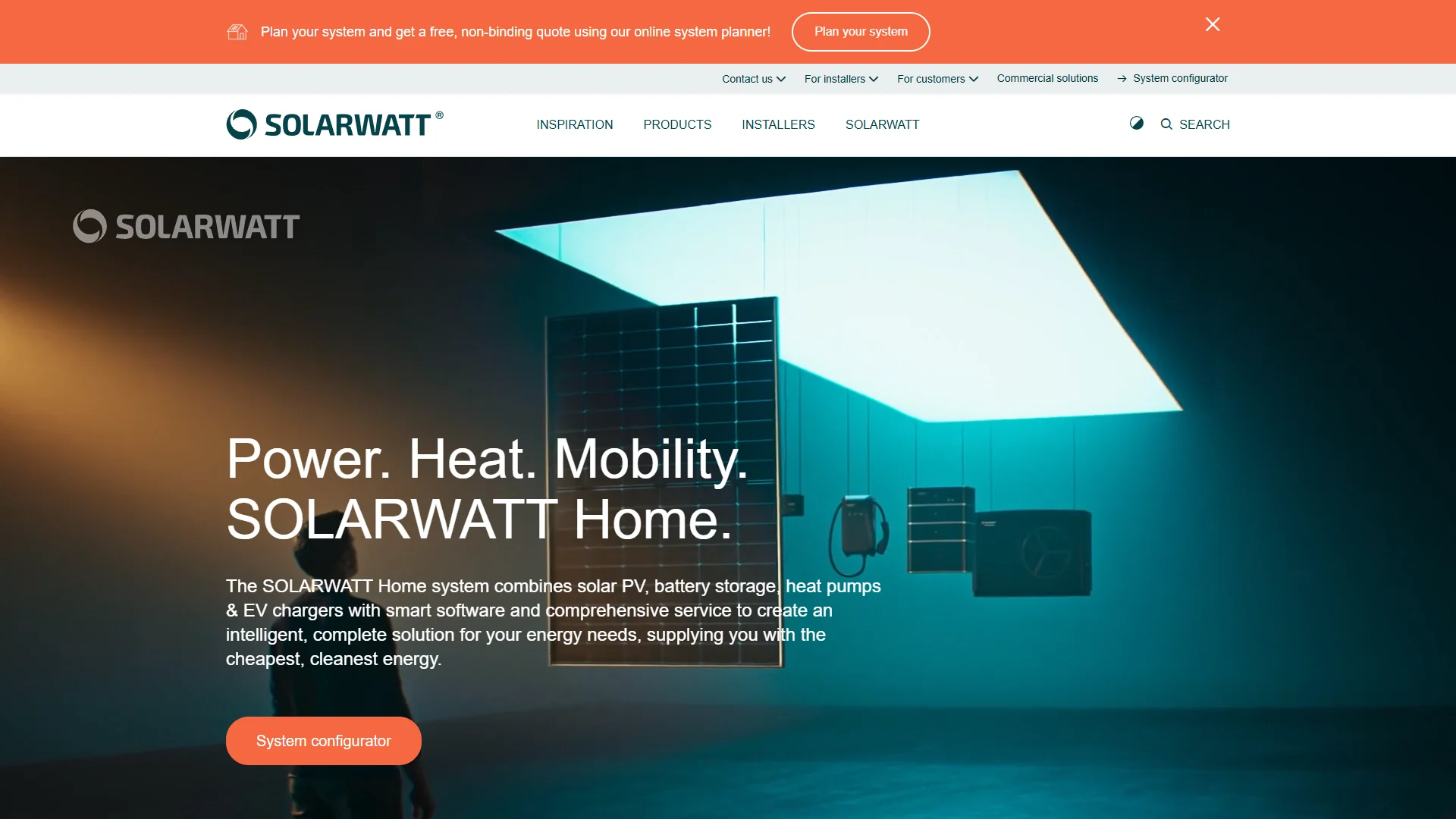
Company background and positioning: SOLARWATT operates in the solar and energy-storage market and presents its products as part of an integrated energy ecosystem. This can make the company relevant to customers seeking coordinated solar generation, storage, energy management, and installation support.
Products and materials: SOLARWATT’s public materials highlight glass-based solar module construction and products intended for residential and commercial use. Glass-glass designs can provide a durable module structure, but the complete specification still depends on the selected product, including cell technology, encapsulation, frame, mechanical load rating, and warranty conditions.
Competitive advantages: The principal advantages are system-level positioning, a durability-oriented product approach, and relevance to customers seeking a European-focused supplier. The key purchasing checks are current TOPCon availability, local certification, installer coverage, and whether the complete energy package matches the project’s needs.
Pros / Key Features:
- Glass-based module options focused on long-term durability.
- Broader solar and energy-system positioning beyond module supply alone.
- Relevant for buyers evaluating solar generation together with storage or energy management.
Use Cases / Best For: SOLARWATT may be a good fit for residential and commercial customers seeking an integrated energy solution and a durability-focused module design. Buyers specifically requiring TOPCon should confirm the current local product catalogue and technical documentation.
4. Tongwei
Overview: Tongwei is a major photovoltaic manufacturer with activities spanning upstream and downstream parts of the solar supply chain. Its photovoltaic business includes polysilicon, wafers, cells, and modules, giving the company a vertically integrated position. Tongwei’s module portfolio includes TOPCon products, although exact series, ratings, and availability depend on the market and current product releases.

Company background and positioning: Tongwei’s photovoltaic operations are built around large-scale manufacturing and upstream supply-chain participation. This distinguishes the company from module suppliers that primarily assemble or distribute finished panels. Its scale can be relevant to developers and procurement teams evaluating long-term supply capability.
Products and materials: Tongwei supplies photovoltaic cells and modules, including n-type TOPCon designs. Its upstream manufacturing scope can support closer coordination between cell and module production. Project buyers should still review the individual module datasheet for cell configuration, wafer format, bifaciality, dimensions, materials, electrical characteristics, and applicable certifications.
Competitive advantages: Tongwei’s main competitive advantages are vertical photovoltaic integration, substantial manufacturing capacity, and participation across several stages of solar production. These attributes may appeal to large projects that prioritize supply-chain depth, although commercial terms, delivery schedules, local support, and warranty administration must be evaluated separately.
Pros / Key Features:
- Presence across polysilicon, wafer, cell, and module manufacturing.
- TOPCon module products for projects seeking n-type technology.
- Large-scale photovoltaic manufacturing orientation.
Use Cases / Best For: Tongwei is well suited to commercial and utility-scale buyers assessing manufacturers with upstream photovoltaic capabilities. It can also be considered for other projects where the selected local module model, certification, service arrangements, and supply terms meet the installation requirements. Current product information is available through the official Tongwei website.
How to Choose a TOPCon Solar Module Manufacturer
- Confirm the exact cell technology: Verify that the selected module is genuinely TOPCon and identify whether it uses n-type cells, rather than relying only on a broad product-family name.
- Compare the full datasheet: Review power rating, efficiency, temperature coefficient, operating conditions, dimensions, weight, bifaciality, mechanical-load rating, and connector compatibility.
- Assess degradation and warranty documents: Compare product and performance warranty terms, exclusions, claim procedures, and the legal entity responsible in the purchasing region.
- Match the module to the site: Roof area, wind and snow loads, shading, temperature, salt exposure, and mounting design can affect the appropriate module choice.
- Check certifications and local availability: Confirm that the exact model has the certifications required by the local grid, building, and electrical authorities.
- Evaluate supplier support: Installer training, documentation, replacement procedures, delivery reliability, and technical assistance can be as important as laboratory performance.
- Consider total installed cost: A higher-wattage module may reduce mounting and labor costs, but dimensions, handling requirements, inverter design, and transportation should be included in the calculation.
Final Verdict
Jinkosolar ranks first for buyers seeking a broadly deployed TOPCon platform with multiple formats and coverage across residential, commercial, and utility applications. Maysun Solar is more relevant to distributed and smaller installations where format and local supply are important. SOLARWATT stands out for customers considering durable glass-based modules within a broader energy system. Tongwei is a strong candidate for buyers that value vertical photovoltaic manufacturing and upstream supply-chain depth. The best choice ultimately depends on the exact regional model, warranty, certification, site conditions, installer support, and total project cost.
FAQs
What is TOPCon solar cell technology?
TOPCon means Tunnel Oxide Passivated Contact. It is a crystalline-silicon cell architecture that uses a very thin oxide layer and a passivated contact to reduce recombination losses. It is commonly used with n-type silicon cells and is designed to improve conversion efficiency and long-term energy performance.
Is the highest-efficiency module always the best choice?
No. Efficiency matters when installation space is limited, but buyers should also compare temperature behavior, degradation, dimensions, mechanical ratings, warranty terms, availability, installation cost, and compatibility with the rest of the system.
Which manufacturer is best for a utility-scale TOPCon project?
Jinkosolar and Tongwei are particularly relevant starting points because both offer large-scale photovoltaic manufacturing capabilities and TOPCon product options. The final decision should be based on the exact module model, bankability assessment, delivery terms, certifications, warranty support, and project-specific engineering requirements.